# Is Your Private Label Raisin Supplier Asking the Right Questions?
Struggling to launch your private label raisins? Supplier issues with quality, packaging, and compliance can stall your project. You need a partner who understands the complete supply chain, not just the product.
A successful private label raisin solution requires a deep alignment of product specifications, packaging formats, labeling compliance, and a stable replenishment plan. It is much more than simply putting your brand's logo on a bag of raisins.
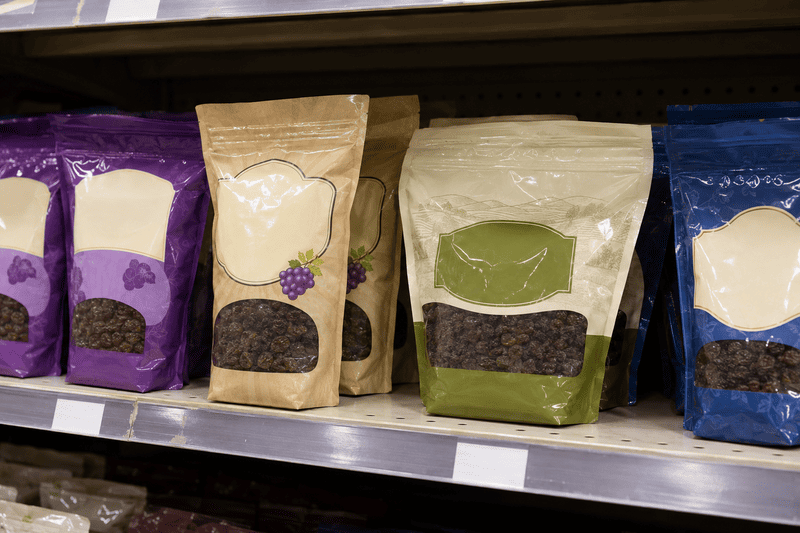
I’ve spent years helping European businesses source raisins, and I've noticed a common pattern. The first conversation is almost always about the packaging. While that's an important piece of the puzzle, it's not the first question a strategic partner should ask. A successful private label program is built on a much stronger foundation. It's about ensuring the product can be sold successfully, replenished reliably, and kept consistent for your customers. Let's explore the questions that truly matter for building a dependable private label raisin supply chain.
Do Custom Bags Define a Private Label Project?
You have a great bag design for your private label raisins. But what if the supplier can't match it, or the quality of the raisins inside is inconsistent?
Custom packaging is important, but a true private label partner first understands your sales channel. The product quality, raisin size, and shelf-life requirements must match whether you're selling in retail stores, to bakeries, or in bulk.
In my experience, buyers often come to us with a finished packaging design. This is a good start, but the conversation needs to go deeper. The real starting point is your sales channel.1 The requirements for raisins sold directly to consumers in a supermarket are very different from those sold to an industrial bakery.2 We always begin by asking where and how the final product will be used. This single question determines almost everything that follows. For example, a retail product needs a visually appealing raisin with uniform color and size, while a bakery might prioritize moisture content for its dough.
Aligning Product with Sales Channel
The specifications must be fit-for-purpose. A retail customer expects a certain look and feel, which means we might select a specific grade of raisin. For a packager who is reselling to the food service industry, consistency in bulk density and flowability might be more critical than individual raisin aesthetics.
Why Channel Determines Packaging Needs
The sales channel also dictates the packaging material and format. A retail bag needs excellent barrier properties to ensure a long shelf life and must withstand handling by consumers. In contrast, raisins for a bakery might be packed in simpler, large-format cartons designed for easy opening and use in a production environment.
| Sales Channel | Key Product Specification | Typical Packaging Format |
|---|---|---|
| Retail Supermarket | Uniform size, color, and appearance | Small consumer bags (100g-500g) with high-quality printing |
| Food Repackager | Batch consistency, specific grade | Bulk cartons (10-12.5kg) or large poly-lined bags |
| Industrial Bakery | Moisture content, sugar levels | Bulk cartons (12.5kg) designed for production line efficiency |
Is Your Supplier Ready for European Market Compliance?
Your product is finally ready to ship. But now it's stuck at the port because of incorrect labeling, causing expensive delays and damaging your launch timeline. You need to verify compliance upfront.
A reliable supplier for Europe must handle more than just raisins. They need to understand and confirm all labeling requirements for your target market, including nutritional information, allergen declarations, and origin statements, preventing costly rejections.
Compliance is not a box-ticking exercise; it’s a critical gateway to your market. We often see inquiries where buyers assume compliance is standard, but the details vary significantly between countries within the EU. A label for Germany may have different language and formatting requirements than one for France.3 Getting this wrong can lead to entire shipments being rejected, creating huge financial losses and stock shortages. That’s why we work with our clients from the very beginning to confirm every detail of the label, ensuring it meets the specific regulations of the destination market. It's a collaborative process that protects your investment and our shared reputation.
Beyond the Barcode: Essential Labeling Elements
A compliant label is much more than a brand logo and a barcode. It's a technical document that must be perfectly accurate. We help clients navigate the complexities of:
- Nutritional Information Panels: Formatted correctly for the region.
- Allergen Declarations: Highlighting any potential allergens, like sulfites, according to EU standards.
- Ingredient Lists and Origin Statements: Clearly stating what's in the bag and where it came from.
- Lot Codes and Traceability: Ensuring every package can be traced back to its production batch.
The Cost of Non-Compliance
The risks are not just financial. A compliance failure can damage your brand's reputation with both retailers and consumers.4 It suggests a lack of professionalism and care. By treating compliance as a core part of the production process, we help you avoid these pitfalls and build trust in your private label brand from day one.
Can the Lowest Unit Price Create the Highest Risk?
You found a supplier with an unbeatable price. But now you are dealing with inconsistent quality batch to batch, customer complaints, and unpredictable late shipments. You must evaluate the total cost.
Focusing only on the lowest unit price can be a trap. Inconsistent batches, quality complaints, and unreliable supply can quickly erase initial savings. True value comes from a stable, predictable supply chain that protects your brand's reputation.
Everyone wants a competitive price, and we work hard to provide one. However, an unusually low price should be a red flag, not a green light. In the raisin business, consistency is everything. If one batch of raisins is dark and moist, and the next is light and dry, your customers will notice.5 These inconsistencies often stem from a supplier cutting corners, perhaps by mixing raw materials from different sources or skipping crucial quality control steps. The small amount you save per kilogram is quickly lost when a major retailer complains or you have to deal with returns. A reliable supply is an investment in your brand's long-term health.
Calculating the True Cost of Sourcing
The price on the invoice is only one part of the equation.6 A focus on total value considers the hidden costs that come with an unreliable supplier.
| Focus Area | Unit Price Focus | Total Value Focus |
|---|---|---|
| Quality | Accepts price-driven quality variations | Demands strict batch-to-batch consistency |
| Supply | Tolerates potential shipment delays | Requires on-time delivery and stable replenishment |
| Risk | High risk of customer complaints and returns | Low risk of brand damage and operational issues |
| Outcome | Short-term savings, long-term problems | Sustainable profitability and brand trust |
How Production Stability Protects Your Brand
Our entire production philosophy is built around stability. With 12 dedicated production lines, we have the capacity to manage large, ongoing orders without compromising our standards. We ensure that the raisins you receive in June are the same quality as the ones you received in January. This predictability is the foundation of a strong private label program. It allows you to confidently place your brand on our product, knowing it will meet your customers' expectations every single time.
Does a Big Factory Guarantee a Reliable Supply?
Your supplier has an impressive factory with shiny new equipment. But communication is poor, and they cannot seem to manage the complexities of export documentation and logistics effectively.
A factory's advanced equipment is only half the story. The real test is its ability to execute. This means robust quality inspection, full traceability, seamless packaging coordination, and professional export handling that ensures your product arrives as expected.
I’ve given tours of our factory many times. Clients are always impressed by our modern equipment and the scale of our 12 production lines. But I always tell them that the machines are only tools. The real value comes from the people and the processes that run them. A reliable private label partnership depends on execution. Can the supplier translate your order into a perfectly finished product, pack it correctly, label it for compliance, and manage the export process so it arrives at your warehouse on time? This is where experience makes all the difference. It's about a deep understanding of the entire supply chain, from sourcing raw fruit to loading the final container.
From Raw Material to Final Product: Our Process
Execution begins the moment raw materials arrive. Our process is designed for control and consistency:
- Raw Material Inspection: We check every incoming batch for quality.
- Automated Cleaning & Sorting: Our lines use advanced optical sorters to remove imperfections and ensure uniformity.7
- In-Process Checks: Quality control staff monitor the product at multiple stages.
- Final Product Testing: We test the finished raisins to ensure they meet the exact specifications of your order.
The Role of Traceability and Quality Control
This rigorous process is supported by a full traceability system. Every carton we ship can be traced back to its production date, the line it was run on, and the raw material batch it came from. This isn't just for safety; it's a tool for consistency. If you ever have a question about a specific shipment, we can provide detailed information immediately. This level of control is what separates a simple producer from a true supply chain partner.
Conclusion
Building a successful private label raisin brand means finding a partner who manages supply chain risk, not just one who fills a bag. We focus on getting it right.
"Food Specifications: Frequently Asked Questions", https://dpi.wi.gov/school-nutrition/usda/product-information/specifications-faq. Food product development literature and private label management frameworks identify end-use channel analysis as a primary input to product specification design, as channel-specific requirements for shelf life, packaging format, and sensory attributes differ substantially between retail, food service, and industrial applications. Evidence role: expert_consensus; source type: paper. Supports: That sales channel requirements should drive product specification decisions in private label food product development.. Scope note: This principle is widely reflected in practitioner literature and trade publications; peer-reviewed academic studies specifically addressing private label raisin specification design are not available. ↩
"Product Specifications & Requirements", https://www.ams.usda.gov/selling-food/product-specs. The Codex Alimentarius Standard for Dried Vine Fruits (CODEX STAN 67-1981, revised) establishes quality grades and moisture content thresholds for dried grapes, providing a basis for the differing specifications applied across retail and industrial end-use contexts. Evidence role: definition; source type: institution. Supports: That raisin quality grades and specifications, including moisture content and appearance, vary by intended end use and sales channel.. Scope note: The Codex standard defines grades but does not explicitly map them to retail versus bakery channels; the channel-to-specification mapping reflects trade practice rather than a single codified rule. ↩
"Food Labelling: A Brief Analysis of European Regulation 1169/2011", https://pmc.ncbi.nlm.nih.gov/articles/PMC5076719/. Regulation (EU) No 1169/2011 on the provision of food information to consumers requires that mandatory particulars appear in a language easily understood by consumers in the member state of sale, and permits member states to stipulate that information be provided in their official language(s), resulting in country-level variation in labeling requirements. Evidence role: mechanism; source type: government. Supports: That EU food labeling requirements include mandatory language provisions that vary by member state, creating country-specific compliance obligations.. ↩
"Consumer Trust in Food and the Food System: A Critical Review", https://pmc.ncbi.nlm.nih.gov/articles/PMC8536093/. Research on food safety communication and consumer behavior indicates that labeling violations and product recalls are associated with measurable declines in consumer trust and brand equity, with effects persisting beyond the resolution of the immediate compliance issue, particularly when the incident receives retail or media visibility. Evidence role: mechanism; source type: paper. Supports: That food labeling violations and compliance failures negatively affect consumer trust and brand reputation beyond the immediate regulatory or financial consequences.. Scope note: Studies on reputational impact are more commonly conducted in the context of food safety recalls than labeling-only non-compliance; direct evidence for the raisin or dried fruit category is not available in published literature. ↩
"The Influence of Consumption Purpose on Consumer Preferences ...", https://pubmed.ncbi.nlm.nih.gov/40509430/. Sensory evaluation studies on dried fruits identify color uniformity and moisture content as primary quality attributes influencing consumer acceptance, with deviations from expected appearance and texture associated with reduced purchase intent and increased complaint rates. Evidence role: mechanism; source type: paper. Supports: That color and moisture content are key sensory attributes by which consumers evaluate dried fruit quality and consistency.. Scope note: Direct consumer complaint data specific to raisin batch inconsistency is limited in published literature; the claim is supported by general sensory science principles applied to dried fruit categories. ↩
"Quality and Safety Risk Control in the Food Supply Chain - PMC - NIH", https://pmc.ncbi.nlm.nih.gov/articles/PMC12985150/. Supply chain management literature establishes the total cost of ownership (TCO) framework as a procurement methodology that accounts for costs beyond purchase price, including quality non-conformance, logistics variability, and supplier reliability, with food industry applications demonstrating that low-price sourcing strategies can generate downstream costs that exceed initial savings. Evidence role: expert_consensus; source type: paper. Supports: That procurement decisions based solely on unit price fail to account for total supply chain costs including quality failures, returns, and disruption-related losses.. Scope note: TCO frameworks are well-established in general procurement literature; empirical studies quantifying these effects specifically in the dried fruit or raisin supply chain are limited. ↩
"[PDF] sensors - Semantic Scholar", https://research.fs.usda.gov/download/treesearch/50556.pdf. Optical sorting systems employing machine vision and near-infrared spectroscopy are documented in food processing literature as effective tools for detecting color defects, foreign material, and size irregularities in dried fruits including raisins, enabling automated removal of non-conforming product during processing. Evidence role: mechanism; source type: research. Supports: That optical sorting systems are applied in dried fruit processing lines to detect and remove defective product and improve batch uniformity.. Scope note: Published performance data for optical sorters is often provided by equipment manufacturers; independent peer-reviewed benchmarks specific to raisin processing are less widely available. ↩